
 Zhejiang wanlai Intelligent electric co., ltd.


What Are B, C, D, K, A and Z Trip Curves for MCB & RCBO?
Selecting the appropriate Trip Curves for MCB and RCBO is crucial for the success of your electrical setup. Trip curves help you synchronize the circuit breakers with the working needs of your equipment, avoiding nuisance tripping.
Why Do Trip Curves Matter?
First, it is important to note that MCBs (Miniature Circuit Breakers) and RCBOs (Residual Current Breakers with Overcurrent protection) are used mostly as protective devices for electrical installations. The devices are designed to trip in case of a fault. However, not every load is the same, and thus they may have different trip curves, which define the trip characteristics of the breakers.
B Curve: Standard residential and light commercial curve for low-inrush resistive and lighting loads, socket outlets, and basic control circuits.
MCBs and RCBOs with B characteristics provide fast magnetic tripping.
Trip Point: tripping at 3-5 In
Advantages: High sensitivity for delicate equipment protection.
Disadvantages: May trip too easily with devices that draw an immediate surge like heavy-duty power tools.
B Curve devices are a good choice for both home and workplace.
C Curve: General commercial and light industrial curve for moderate startup inrush.
C curve MCB’s and RCBO’s are the main players in electrical circuit protection. They are designed for standard load devices, like outlets, computers, fridges, and lighting products, and engineered to allow for minor inrush.
Trip Point: 5-10In
Advantages: Works with regular power surges; less chances of unintentional tripping.
Disadvantages: Slower than B Curve and may allow some unnecessary power surge to pass through.
C curves tolerate roughly double the inrush current before tripping, making them better suited to circuits with small motors or mixed loads.
The D Curve: High-inrush curve for heavy industrial loads with severe startup spikes.
Trip Point: 10-14In
Advantages: Can handle huge initial surge currents.
Disadvantages: Inapplicable in cases where precision is needed; might not be fast enough for electronic systems.
The K Curve: is common for standard motor and transformer circuits.
The K Curve MCB and the RCBO are all about the heavy duty magnetic apparatus such as elevators, large compressors, and industrial tool motors.
Industrial curve tailored for inductive loads with frequent start/stop cycles or motor starting surges, sitting between C and D.
Trip Point: 8-12In under IEC 60947-2
Advantages: Well balanced – not as quickly tripping as C while not as sensitive as D either.
Disadvantages:K‑curve devices bridge conventional and heavy‑duty industrial protection scenarios.
K Curves play a significant role in connecting conventional applications with high-end ones.
The A Curve: Ultra‑sensitive magnetic trip for precision electronics, semiconductors, medical devices and PLC automation systems.
The A Curve MCB and RCBO are meant for ultra-sensitive, technologically advanced environments. This is the environment where medical equipment, PLCs, or advanced automation systems work.
Trip Point: 2-3In
Advantages: Triggers immediately; good for safeguarding expensive, delicate electronics.
Disadvantages: Somewhat oversensitive for several situations; may trigger at the wrong time.
The Z Curve: Maximum Sensitivity for Mission-Critical Circuits
If you are protecting apparatus where even the slightest overload can lead to catastrophe, consider using the Z Curve MCB and RCBO.
Trip Point: 2-3In
Advantages: Ultra‑fast magnetic response for semiconductor assets.
Disadvantages: Z curve breakers are built for loads with essentially no inrush tolerance
Most often semiconductor equipment and other highly sensitive electronics where even a brief current spike needs to trip the circuit.
MCB vs RCBO: How Do Trip Curves Fit In?
We compare trip curves for MCBs and RCBOs. Both have B, C, D, K, A and Z over current trip curves.
An MCB protects only against overloads and short circuits. An RCBO includes this same over current trip‑curve protection, plus residual‑current protection.
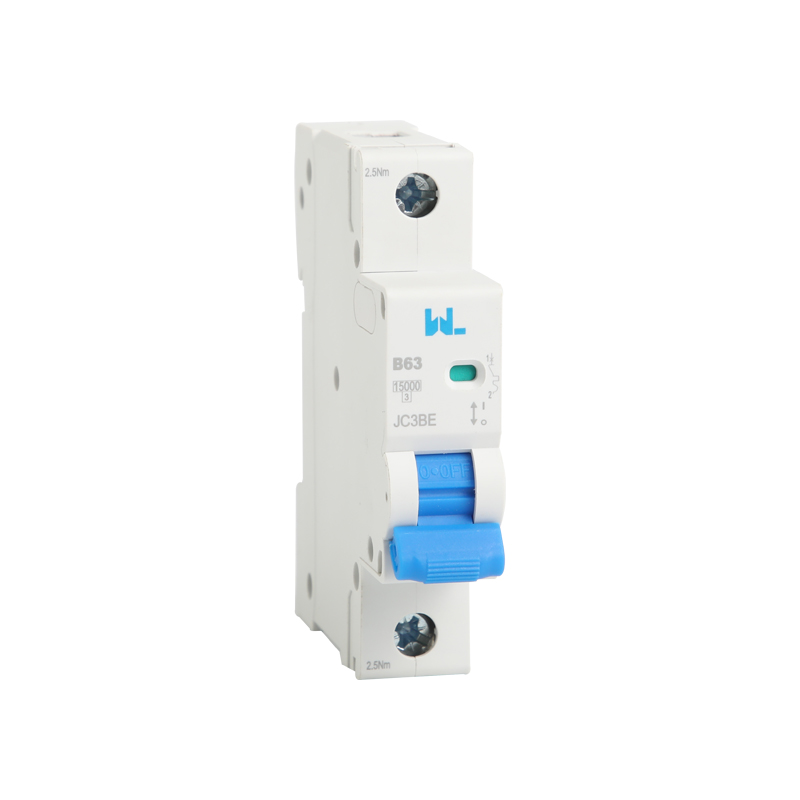
Standalone MCBs work for simple circuits. RCBOs offer greater safety, and their trip curve still controls overload / short‑circuit tripping behaviour. Our JC3BE MCB is a solid option for AC system circuit protection.
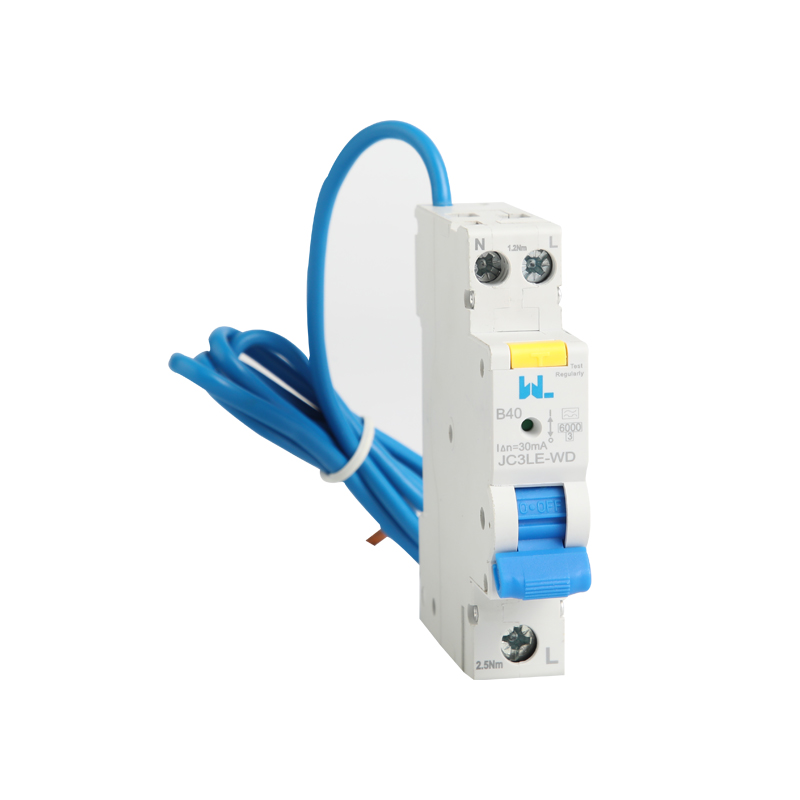
The JC3LE‑WD RCBO is also available with B or C trip curves for your circuit selection.
FAQ: The Most Common Questions About Trip Curves
Q: Is A-Curve the same as Type A?
A: No! A curve is how quickly does a breaker perform when there is an overcurrent. Type A on the other hand deals with the manner in which the residual-currents are sensed by the breaker.
Q: Can I mix different trip curves in my panel?
A: Different trip curves can be used within one distribution panel, provided selectivity coordination is verified. The more sensitive MCBs (lower magnetic trip multiples) are typically installed downstream closer to loads, while MCBs with higher magnetic‑trip thresholds are placed upstream toward the supply source.
Q: Why don’t I see Z Curve breakers everywhere?
A: The devices are built for highly specialized operations. In other areas apart from high-stakes electronics, the devices are too sensitive and prone to nuisance tripping.
Q: What happens if the trip curve is wrong?
A: An overly sensitive curve causes frequent nuisance tripping and circuit interruption. A curve with an excessively high magnetic‑trip threshold may fail to provide instantaneous short‑circuit protection, resulting in equipment damage or even cable fire hazards.
In conclusion, choosing the right Trip Curves for MCB & RCBO isn’t overly complicated but it is important. Choosing the right trip curve brings trouble-free operation and higher safety for people and assets.
- ← Previous:Understanding Type AC, A, B RCD and RCBO
- :Next →


