Zhejiang wanlai Intelligent electric co., ltd.


Different tripping curves in miniature circuit breakers
In our daily lives, we often see circuit breakers in the electrical panel. You may have noticed letters like “A,” “B,” or “C” on them. These letters don’t represent the brand or quality. Instead, they indicate the “tripping characteristic” of the breaker, which is how quickly it reacts to different levels of excess current. This is directly related to electrical safety and reliability. Below, we will explain the common A-type, AC-type, and B-type circuit breakers in detail.
1. Type A Circuit Breaker: The “Quick-Response Expert” for Sensitive Equipment
The Type A circuit breaker is known for its high sensitivity. It is designed to protect electronic equipment that is very sensitive to current changes, such as semiconductor components, precision instruments, laboratory equipment, or valuable computer servers.
Here’s how it works: When the current in the circuit reaches 2 to 3 times its rated current, it will trip and cut off the power extremely quickly (usually within a fraction of a second). This fast reaction helps prevent damage from minor overloads and short circuits, protecting delicate internal circuits from small power surges. Therefore, a Type A circuit breaker acts like a dedicated guard, providing close protection for “delicate” electronic equipment, stopping danger the moment it appears. In ordinary homes, pure Type A breakers are rarely seen unless there is a specific need.
2. Type AC Circuit Breaker: The “All-Round Standard Guard” for Home Use
The Type AC circuit breaker is the most common and widely used type in our home electrical panels. The “AC” specifically means it is optimized for common faults in “Alternating Current” circuits. It perfectly balances sensitivity and the ability to resist false triggering, making it ideal for protecting regular household appliances and wiring.
Its instant trip range is typically 5 to 10 times its rated current. This means that when there is a temporary, high current (for example, from a motor starting up), it can handle it for a very short moment without tripping unnecessarily. But when a real short-circuit fault happens, it will quickly cut off the circuit.
This characteristic makes Type AC breakers very suitable for protecting appliances like lights, televisions, computers, water heaters, as well as refrigerators, air conditioners, and washing machines which have small motors. It can withstand the inevitable surge current when appliances start up, while also reliably protecting people and the wiring in case of a serious fault. It is truly the reliable backbone of home electrical systems.
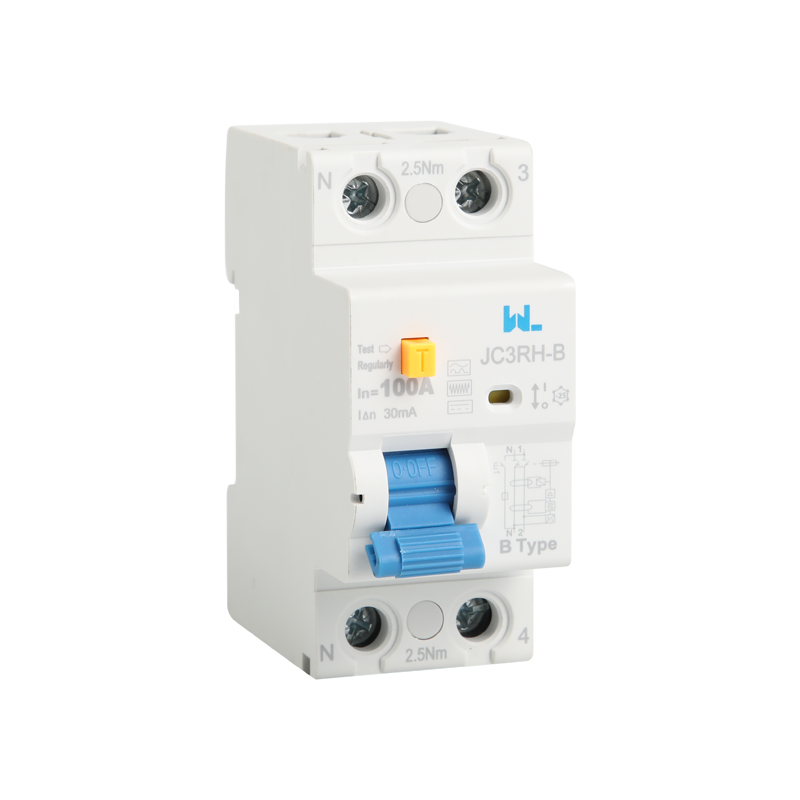
3. Type B Circuit Breaker: The “Tolerant Guardian” for Handling Surge Currents
The Type B circuit breaker’s characteristic is between Type A and the more common Type C, but it is better at handling higher surge currents. Its instant trip range is typically 3 to 5 times its rated current.
This makes Type B breakers particularly suitable for protecting equipment that creates a relatively high surge current when starting up, but not high enough to require a Type C breaker (which has a trip range of 5-10 times). Common uses include certain types of discharge lighting systems (like large fluorescent light fixtures), small transformers, and some motor equipment with specific starting characteristics. It is more tolerant of startup current surges than Type A, but acts a bit faster than Type C. It plays a unique role where a balance of surge tolerance and relatively fast protection is needed. In residential homes, Type B is less common than Type AC and is more often found in specific commercial or industrial lighting circuits.