Zhejiang wanlai Intelligent electric co., ltd.


An Overview of Common Rcbo Types and Their Core Specifications
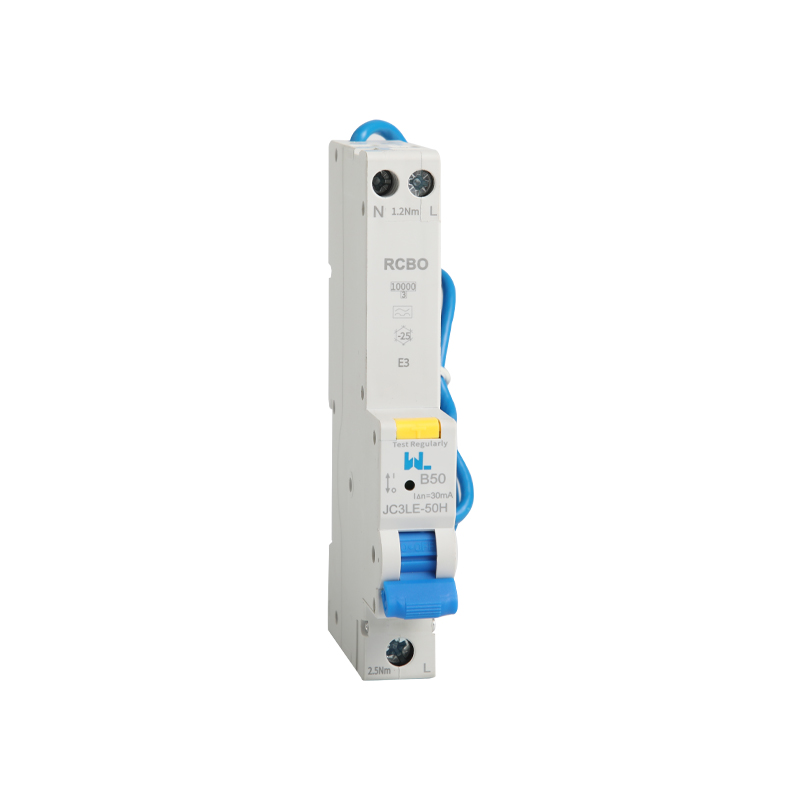
Rcbo Types represent a critical category of electrical protection devices, combining the functions of a circuit breaker and a residual current detector in a single unit. The JC3LE-50H model, as a 1P+N single-module device, serves as a prime example of this technology. Its primary purpose is to provide comprehensive safety by guarding against both overcurrent faults and earth leakage currents, which can prevent electric shock and fire hazards. The design of such Rcbo Types is governed by stringent international standards, including IEC61009-1 and EN61009-1, ensuring a consistent baseline for performance and safety.
A key distinguishing factor among different Rcbo Types is their residual current sensitivity and classification. This particular model is available with trip sensitivities of 30mA, 100mA, or 300mA, catering to various protection scenarios from personal shock prevention to equipment fire risk reduction. It can be supplied as either A-type or AC-type, with A-type offering protection against pulsating DC residual currents in addition to AC, making it suitable for modern electronic loads. This variability is central to the application-specific nature of advanced Rcbo Types.
The device’s overcurrent protection capabilities are defined by its rated conditional short-circuit capacity of 10 kA and a configurable rated current of up to 50A. This 10 kA breaking capacity signifies the maximum fault current the device can safely interrupt, a vital safety metric. The availability of different rated currents within a range from 2A to 50A allows for precise selection to match the specific load and circuit characteristics, highlighting the flexibility engineered into modern single-module Rcbo Types.
Operational efficiency is another significant feature of this product category. The JC3LE-50H incorporates a double-pole switching mechanism, which ensures complete isolation of both the line and neutral conductors during a fault or manual operation. The inclusion of neutral pole switching is a notable design advancement that significantly reduces the time required for installation and mandatory testing procedures. This feature enhances both safety for the electrician and long-term operational reliability.
The technical profile of the JC3LE-50H provides a clear window into the functional priorities of contemporary Rcbo Types. The integration of a high breaking capacity, configurable current and sensitivity ratings, and user-friendly features like bottom connectivity and neutral switching, defines them as sophisticated and indispensable components in modern electrical installations. The continued evolution of these devices focuses on enhancing both protective performance and installation efficiency.