Zhejiang wanlai Intelligent electric co., ltd.


125A Circuit Breaker Enhances Electrical Safety Standards
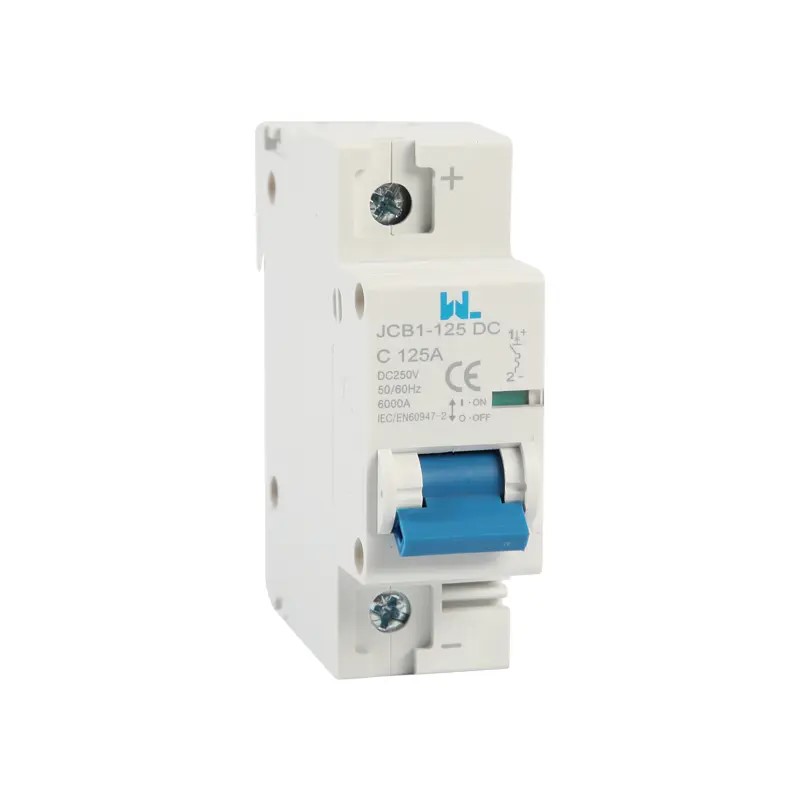
The JCB1-125 miniature circuit breaker offers robust short-circuit and overload protection with a 6-10kA breaking capacity. Compliant with IEC 60947-2, it features a compact design and is ideal for residential, commercial, and industrial applications.
In an era where electrical safety is paramount, the introduction of the JCB1-125 miniature circuit breaker (MCB) marks a significant advancement in circuit protection technology. Designed to handle currents from 63A to 125A, this device provides critical safeguards against short circuits and overloads, ensuring the integrity of electrical systems in diverse environments.
The JCB1-125 boasts a breaking capacity of 6kA or 10kA, meaning it can interrupt substantial electrical faults without failure. This capability is crucial in preventing equipment damage, fires, and other hazards associated with electrical anomalies. Available in both C and D curves, the MCB caters to different load types: C curves are typically used for residential and commercial applications with moderate inrush currents, while D curves are suited for industrial settings with high inductive loads, such as motors and transformers.
With a module width of just 27mm, the JCB1-125 exemplifies space efficiency without compromising performance. Its compact design allows for high-density installation in distribution boards, making it an excellent choice for modern electrical systems where space is at a premium. Additionally, the MCB features a contact indicator, providing visual confirmation of the circuit status—a small but vital detail for maintenance and troubleshooting.
Compliance with IEC 60947-2 underscores the device’s adherence to international safety and performance standards. This ensures reliability and interop erability in global markets, giving engineers and electricians confidence in its application. The MCB is available in 1 to 4 poles, offering flexibility for single-phase and three-phase systems.
Applications range from domestic installations to complex commercial and industrial networks. In homes, it protects lighting and power circuits; in industries, it safeguards machinery and distribution lines. Its robust construction and high breaking capacity make it particularly valuable in settings where electrical faults could have severe consequences.
The science behind MCBs revolves around electromagnetism and thermal dynamics. During a short circuit, the sudden current surge activates an electromagnetic trip mechanism, swiftly disconnecting the circuit. For overloads, a bimetallic strip heats and bends, triggering a thermal trip. This dual-protection mechanism ensures comprehensive safety.
In summary, the JCB1-125 MCB represents a blend of innovation, safety, and efficiency. Its introduction addresses growing demands for reliable circuit protection in an increasingly electrified world, setting a new benchmark for performance and design in electrical components.