Zhejiang wanlai Intelligent electric co., ltd.


MCB vs RCBO: Understanding Circuit Protection Differences
MCBs and RCBOs are vital electrical safety devices. An MCB protects against overcurrent from short-circuits or overloads. An RCBO provides this same protection PLUS life-saving protection against earth leakage currents, which can cause electric shock. Choosing the right device is crucial for safety.
In any modern electrical installation, safety devices are paramount. Two critical components found in distribution boards are the Miniature Circuit Breaker (MCB) and the Residual Current Circuit Breaker with Overcurrent (RCBO). While they may look similar, their functions and the level of protection they offer are distinctly different.
An MCB is a fundamental protective device. Its primary function is to safeguard the electrical circuit’s wiring from damage due to excessive current. It does this by automatically switching off the circuit in two specific scenarios:
1. Overload: When the current flowing through the circuit consistently exceeds its safe rated capacity for a prolonged period (e.g., too many appliances plugged into one circuit).
2. Short Circuit: When a very high current flows due to a fault, such as a live wire touching a neutral wire.
In both cases, the MCB prevents overheating and potential fires by cutting off the power. However, it offers no protection against earth faults.
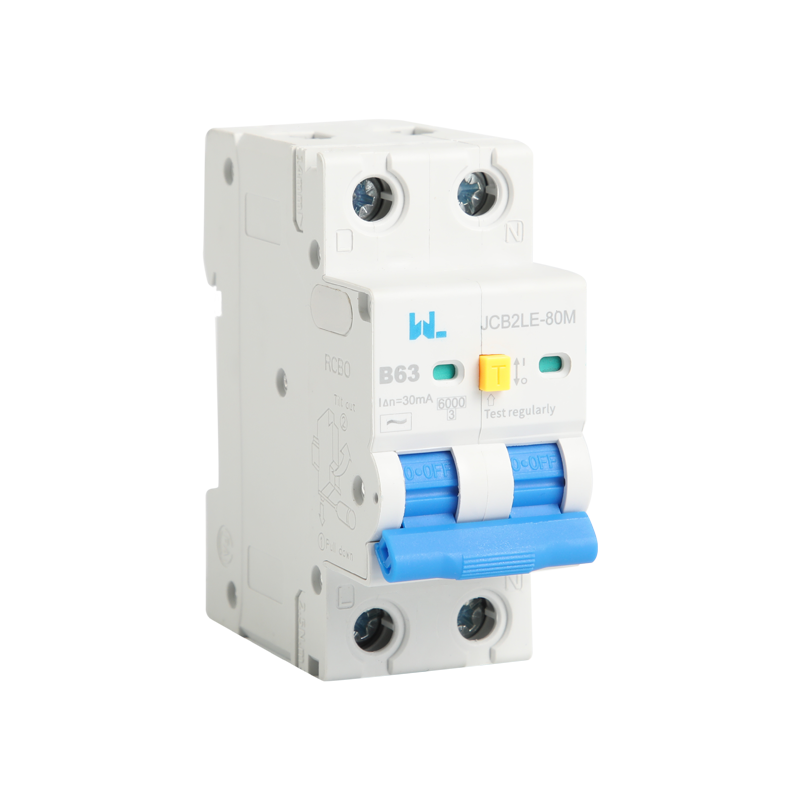
This is where the RCBO comes in. An RCBO is essentially a combination device, integrating the functions of an MCB and a Residual Current Device (RCD). It provides the same overcurrent and short-circuit protection as an MCB. Crucially, it adds a third, life-saving layer of protection: protection against earth leakage currents.
An RCBO constantly monitors the balance of current flowing in the live and neutral conductors. If it detects a tiny imbalance (typically as low as 30mA), indicating that current is leaking to earth—perhaps through a person touching a live part—it will trip within milliseconds. This rapid response can prevent a severe or fatal electric shock.
The Key Difference: The fundamental difference lies in the scope of protection.An MCB protects the circuit and property from fire and damage. An RCBO does all that, and also protects people from electric shock.
Application: In a typical household consumer unit,you might find MCBs protecting individual circuits (lights, sockets), with one or more main RCDs providing shared earth leakage protection for several circuits. If a fault occurs on one circuit, the main RCD will trip, cutting power to all the circuits it protects.
An RCBO, however, is used on a per-circuit basis. It provides “discriminated” protection. If an earth fault occurs on a single circuit protected by an RCBO, only that RCBO will trip, isolating the faulty circuit while leaving all other circuits in the home operational. This makes RCBOs a superior choice for both safety and convenience.
In summary, while an MCB is a vital component for electrical safety, an RCBO offers a more comprehensive solution by combining overcurrent and earth leakage protection in one unit, directly safeguarding both your property and the people within it.